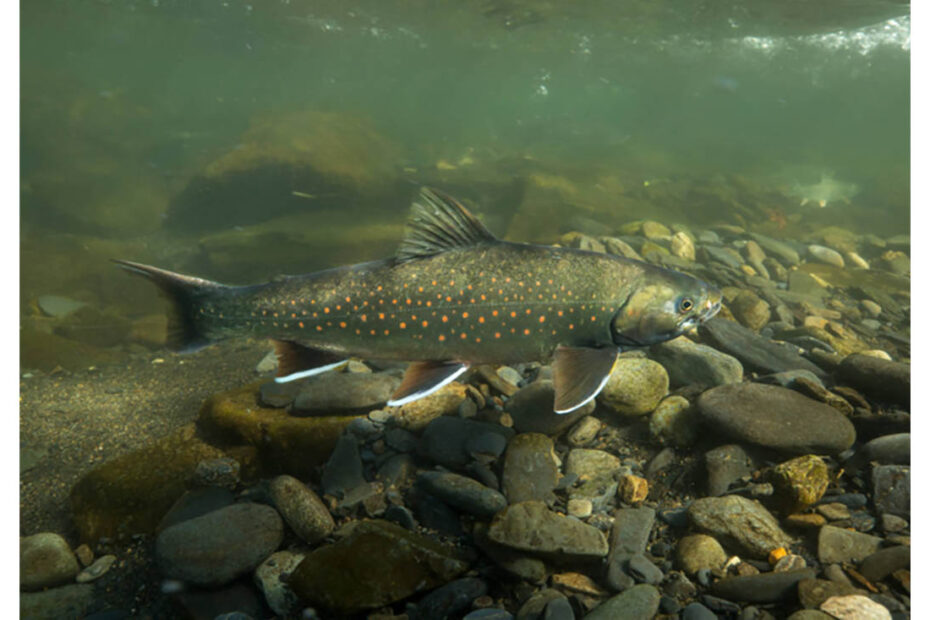
Is it a bull trout or Dolly Varden? It’s a simple question that has created endless debate among the fishing communities of the US and Canada. If you can’t tell them apart, you’re not alone. Differentiating these two similar-looking, related species has even confounded many biologists.
This article aims to end the long-standing Dolly Varden vs bull trout debate once and for all. It will provide you with methods to distinguish the two fish in the field and at home. You’ll also learn the historical context of the confusion and why proper identification matters. This article gets somewhat technical. If you want a short answer, jump to the conclusion.
The Tangled History of Bull Trout and Dolly Varden
The bull trout (Salvelinus confluentus) and Dolly Varden (Salvelinus malma) have long been a source of confusion among biologists, anglers, and even regulatory agencies. The two char were historically considered a single species, Dolly Varden, because of their similar appearances and overlapping habitats. Only in recent decades has a clear picture emerged, yet many people continue to refer to both species as simply “Dollies.”
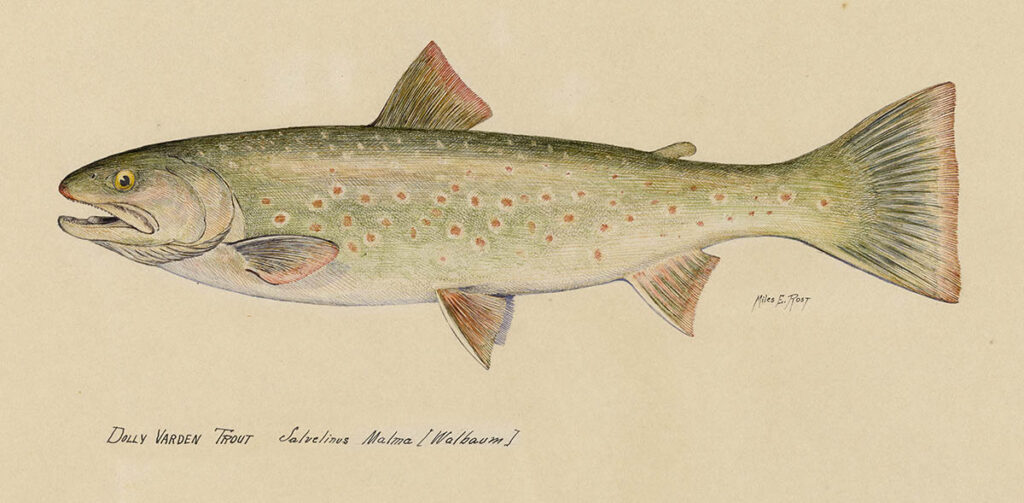
Bull Trout or Dolly Varden: Over a Century of Confusion
The first scientific North American description of these two fish was in 1858 from the Puyallup River, Washington. This specimen was a bull trout, but it didn’t have a common name at the time.
The first instance of the common name Dolly Varden appeared in the 1870s. Vividly colored char from the McCloud River in California were given the moniker. The name is from the Charles Dickens character Dolly Varden, who was known for her bright and colorful dresses. This is one source of the confusion of bull trout vs Dolly Varden. The common name stuck and was applied to both species. We now know that those original Dollies were actually bull trout.
For about a century, bull trout were classified as a form or subspecies of Dolly Varden. They were lumped together because of morphological (physical) similarities and overlapping ranges. Fisheries managers and scientists treated them interchangeably, referring to both as Dolly Varden trout. This name Dolly persists in angler circles to this day. And it’s easy to see why confusion remains. Even the state of Washington’s fishing regulations don’t differentiate between these two species. Instead, it refers to both as Dolly Varden/bull trout.
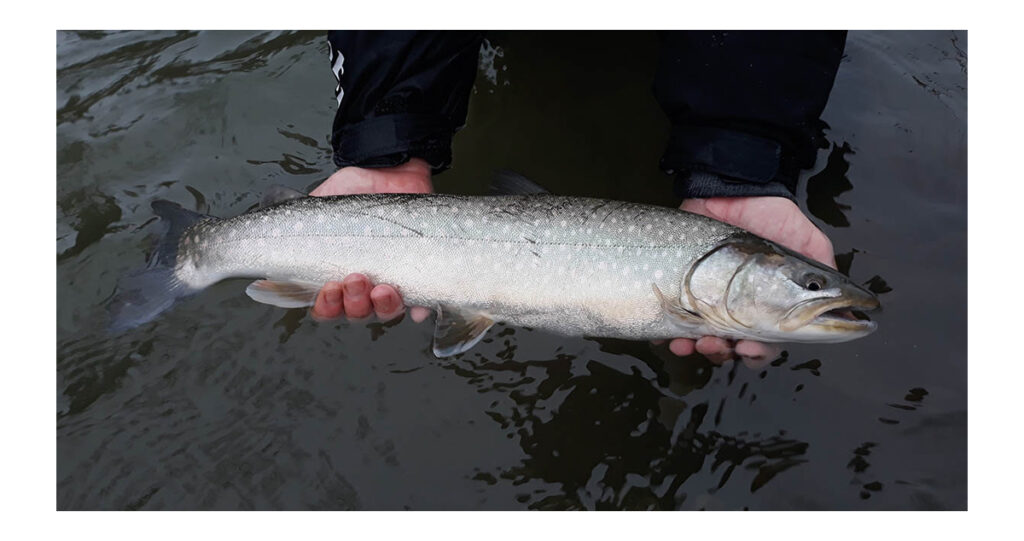
No Longer One Species: The Classification of Bull Trout
A turning point came in 1978 when ichthyologist Cavender formally reclassified bull trout as a distinct species, Salvelinus confluentus. This taxonomic split was grounded in differences in morphology, meristics, life history strategies, and geographic distribution. Confusion persisted in the field despite the reclassification due to the difficulty of distinguishing the two fish without close examination or genetic testing.
Biologists Learn How to Tell the Two Char Apart
It wasn’t until 1991 that biologists had a reliable way of distinguishing the two fish in the field. A landmark paper by George R.Haas and J. Donald McPhail used linear discriminant analysis to evaluate morphological and meristic characters to differentiate Dollies from bull trout. The method counts the number of branchiostegal rays and anal fin rays, as well as upper jaw length relative to standard length. The numbers are plugged into a formula that is fairly accurate at determining the fish ID. Their findings demonstrated consistent, statistically significant differences between the two species, even in watersheds where both occurred. We’ll discuss this formula later.
Genetic Divergence and Evolutionary Origins
Since the Haas & McPhail paper, genetic studies have confirmed and deepened the distinction between bull trout and Dolly Varden.
Molecular analyses support a divergence during the Pleistocene. This was likely driven by glacial isolation within the Columbia River and other inland systems. There was also a hybridization event at this time with Taranetz char (Salvelinus taranetzi). Meanwhile, Dolly Varden occupied coastal refugia during this glacial period. They began diverging from other Dolly Varden into the American Dolly Varden subspecies (Salvelinus malma lordi), which is also called the southern Dolly Varden.
Bull Trout vs Dolly is Still Hard to Determine
Despite the taxonomic clarity and morphometric research, differentiating Dollies from bull trout in the field remains difficult. They look very similar superficially, especially juvenile fish. This has led to the US Fish and Wildlife Service applying the Similarity of Appearance clause under the Endangered Species Act, allowing for bull trout protections to extend to areas where misidentification with Dolly Varden could undermine conservation efforts.
The use of regional watershed knowledge and genetic testing is the most reliable means of identification.
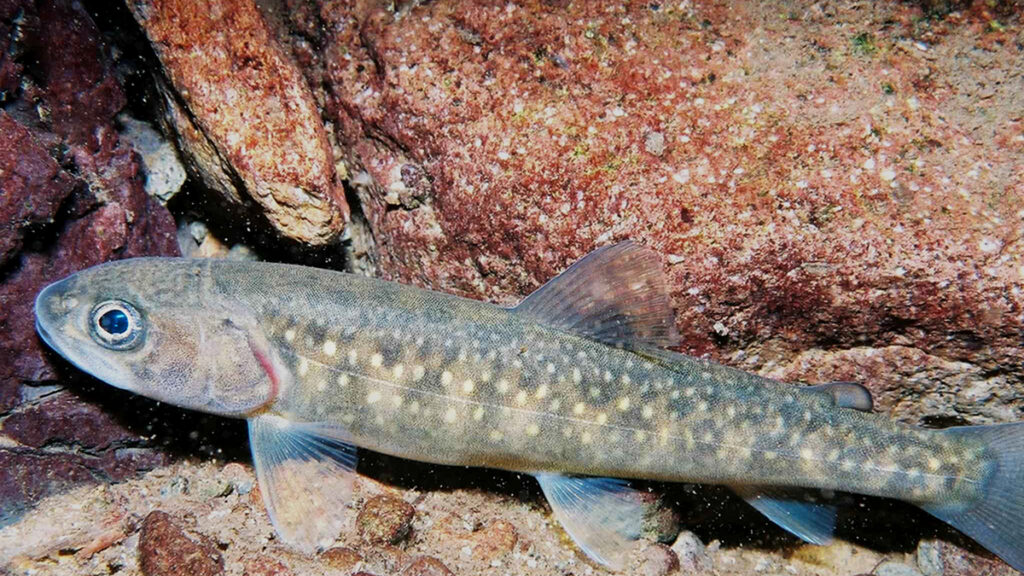
Differences Between Dolly Varden and Bull Trout
Let’s discuss the physical differences between these two fish, as well as life history and watershed differences. Understanding this will allow you to differentiate Dolly Varden and bull trout.
Differences in Appearance
We already know that Dollies and bull trout look very similar. However, several morphological traits can help ID the right fish.
Branchiostegal ray count is arguably the most reliable morphological feature used to distinguish bull trout from Dolly Varden. Bull trout typically have 12 or more branchiostegal rays, while Dolly Varden generally fall within the 9 to 15 ray range. Overlap exists, but bull trout usually have higher numbers. Some records have shown Dolly Varden with unexpectedly high ray counts (even over 26), but these cases are rare. The LDF developed by Haas and McPhail heavily weights this feature when classifying specimens.
Anal fin ray counts also show some distinction between the two species. Bull trout tend to have more anal fin rays on average than Dolly Varden. While Dolly Varden usually possess between 10 and 15 anal rays, bull trout often exhibit counts toward the upper end of this range or slightly beyond. However, this trait is best used in combination with others rather than as a standalone identifier. Anal fin ray count is also a part of the LDF.
Jaw length relative to standard body length is another key characteristic separating these two species. Bull trout typically have a larger upper jaw, which often extends past the eye. This is especially true in mature individuals. In contrast, Dolly Varden tend to have a shorter upper jaw, which usually does not extend beyond the eye. Haas and McPhail also incorporated this ratio into the LDF.
Finally, the shape of the head also provides clues. Bull trout tend to have a broader, flatter head that’s larger overall. Dolly Varden tend to have a more tapered head shape.
Life History Clues
One of the most practical ways to distinguish bull trout from Dolly Varden in regions where both species occur is by examining their life history strategies. Bull trout are often migratory with adfluvial, fluvial, or even anadromous life histories. They’re also more piscivorous and can reach large sizes as a result of these feeding opportunities.
In contrast, Southern Dolly Varden are more frequently small, resident fish, often confined to headwater streams above barriers. However, in areas where bull trout are absent and Dolly Varden have access to the ocean, anadromous Dolly populations are common. This is particularly the case in coastal regions of Alaska and British Columbia.
The Formula for Differentiating Bull Trout vs Dolly Varden
The Linear Discriminant Function (LDF) for bull trout and Dolly Varden is a statistical formula developed by Haas and McPhail to distinguish these two fish based on quantitative morphological traits. The formula combines multiple variables into a single score that predicts species identity with high accuracy in most adult fish:

LDF = (0.629 × branchiostegal rays) + (0.178 × anal fin rays) + (37.310 × jaw-to-body ratio*) − 21.8
*Jaw-to-body ratio = Upper jaw length ÷ Standard length
LDF > 0 = Bull trout; LDF < 0 = Dolly Varden
A positive LDF score indicates a bull trout, while a negative score suggests a Dolly Varden. The LDF is generally accurate and is especially useful in zones of sympatry where the two species co-occur and traditional field ID methods fall short.
However, the LDF is not without limitations. Its accuracy depends heavily on precise measurements, which can be difficult to obtain, particularly with small fish. The method is most reliable in mature individuals, where the differences in jaw length and ray counts are more fully developed. In juvenile fish, these traits can be underdeveloped or more variable, leading to misclassification. When the formula misidentifies the species, it’s usually bull trout misidentified as Dolly Varden.
Despite such shortcomings, the LDF remains a powerful tool in morphological identification, especially when combined with genetic data or used by trained biologists under controlled conditions. For field use, it offers a more systematic alternative to purely subjective identification.
Proper Handling
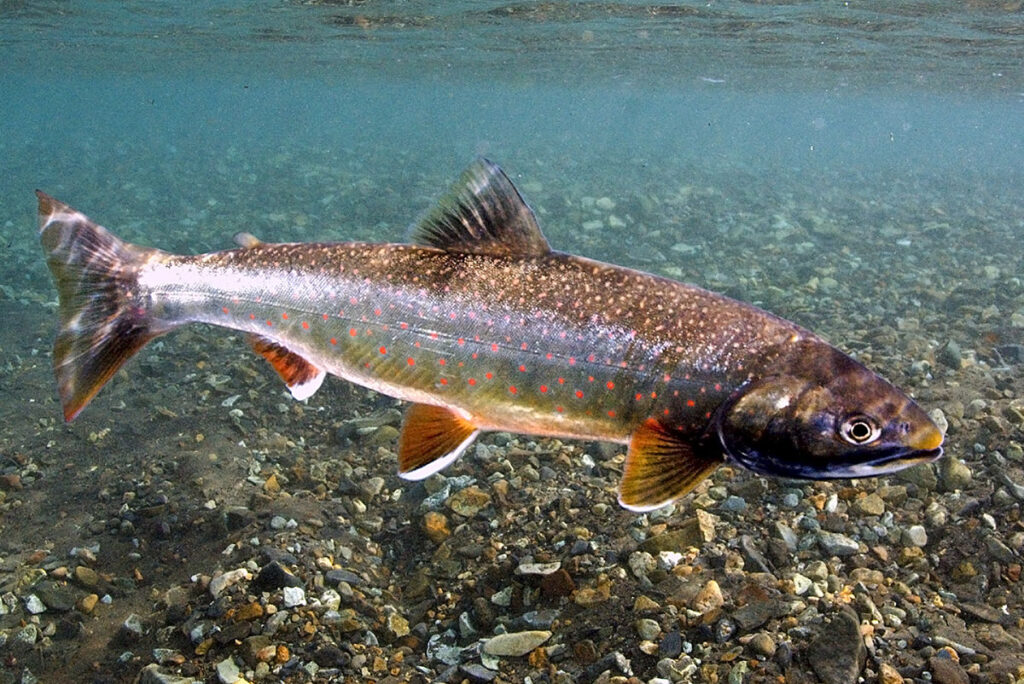
Please be mindful that char are very sensitive to handling. Keep them in the water and use wet hands. A quick picture of the branchiostegal rays and anal fin allows a faster release than counting streamside. Advanced preparation is the best way to ensure these fish aren’t harmed.
Genetic Testing and How Anglers Can Use It
Genetic testing is the most accurate way to confirm species identity between Dolly Varden and bull trout. But it’s not something the average angler can easily do themselves. Fortunately, biologists have already done the hard work. By tapping into the growing body of genetic data and species maps, anglers can make highly informed guesses about which species they’re encountering based on where they fish.
The Gold Standard of Char Identification: Genetic Testing
When field ID isn’t enough, researchers use DNA testing to determine which species is present. This involves collecting a small tissue sample from a fish or taking a water sample to detect trace DNA, called eDNA. Scientists in the lab look at genetic markers that clearly distinguish bull trout from Dolly Varden. These methods are accurate and are now used to map the range of each species and monitor where they overlap.
A Shortcut for Anglers: Use the Data That’s Already There
You don’t need to collect DNA to determine Dolly vs bull trout. In many cases, the work has already been done.
Biologists have mapped the distribution of both bull trout and Dolly Varden in detailed watershed studies and government databases. Tools like the ArcGIS Bull Trout Range Viewer can often determine which species should be present.
The easiest option is to search the particular watershed plus “bull trout” or “dolly varden.” Another helpful search term to include is “.pdf.” This will bring up scientific studies and government papers about the watershed and its fish.
Doing a little homework before your trip can go a long way toward making an accurate ID on the water.
Why Genetics Matter
From a management perspective, accurate ID is critical. Bull trout are listed as a threatened species under the Endangered Species Act, while Dolly Varden are not. In addition, hybrids can occur between bull trout and brook trout, further complicating things for field crews and anglers alike.

Distribution of Bull Trout and Dolly Varden by State and Province
Does your state or province have bull trout, Dolly Varden, or both? Dolly Varden consists of several subspecies and have a much larger overall range than bull trout.
Washington Bull Trout and Dolly Varden
Washington is the only state in the Lower 48 that supports populations of both bull trout and Dolly Varden. Bull trout are far more widespread, dominating much of the Columbia River basin, as well as major watersheds throughout the Puget Sound and Washington coast.
Dolly Varden have a much more limited distribution. They are mostly confined to the cold, upper reaches of a handful of watersheds on the Olympic Peninsula and draining into the Puget Sound. These populations are typically small, resident, and isolated. They typically occur above natural barriers and are separated from bull trout by elevation or habitat.
Most reported populations are likely bull trout unless genetic data is available.
Idaho and Montana Bull Trout
Bull trout are fairly common throughout Idaho, especially in the northern part of the state. They are also present in western Montana. Dolly Varden aren’t known to inhabit either state.
Oregon Bull Trout
Oregon is near the southern extreme of the bull trout’s range. They can be in many Columbia River tributaries, including the Willamette, Deschutes, John Day, and Snake Rivers. An isolated pocket of bull trout also persists in the upper Klamath River basin. Dolly Varden aren’t known to inhabit Oregon.
California Bull Trout: The Original “Dolly Varden” Fish
California’s McCloud River once had a population of bull trout. They were the southernmost known population. However, dams on the Sacramento and McCloud, alongside the introduction of nonnative trout species, led to the extirpation of these fish. They were last seen in the 1970s. A reintroduction attempt in the 1990s failed.
Nevada Bull Trout
An isolated population of bull trout persists in the Jarbidge River system of northern Nevada. This is currently the southernmost population of bull trout.
Alaska Dolly Varden
Dolly Varden are found along the entire coastline of Alaska, as well as many islands of the Aleutians. There are only isolated populations of bull trout in southeast Alaska.
British Columbia Dolly Varden and Bull Trout
There is a great overlap of these two fish species in British Columbia. In general, bull trout are found more inland, and Dollies are more coastal. Most of this large province is home to bull trout, whereas Dolly Varden are mostly limited to the coast. Only Dolly Varden are present on Vancouver Island.
Alberta Bull Trout
Most of this large province is home to bull trout.
Yukon and Northwest Territories Bull Trout and Dolly Varden
Bull trout are found in watersheds at the headwaters of the Yukon and Mackenzie Rivers. Dolly Varden are distributed among the coastal Arctic watersheds of these provinces. Yukon also has populations of Dollies along its borders with Alaska and British Columbia.
Bull Trout or Dolly: The Smart Angler’s Approach
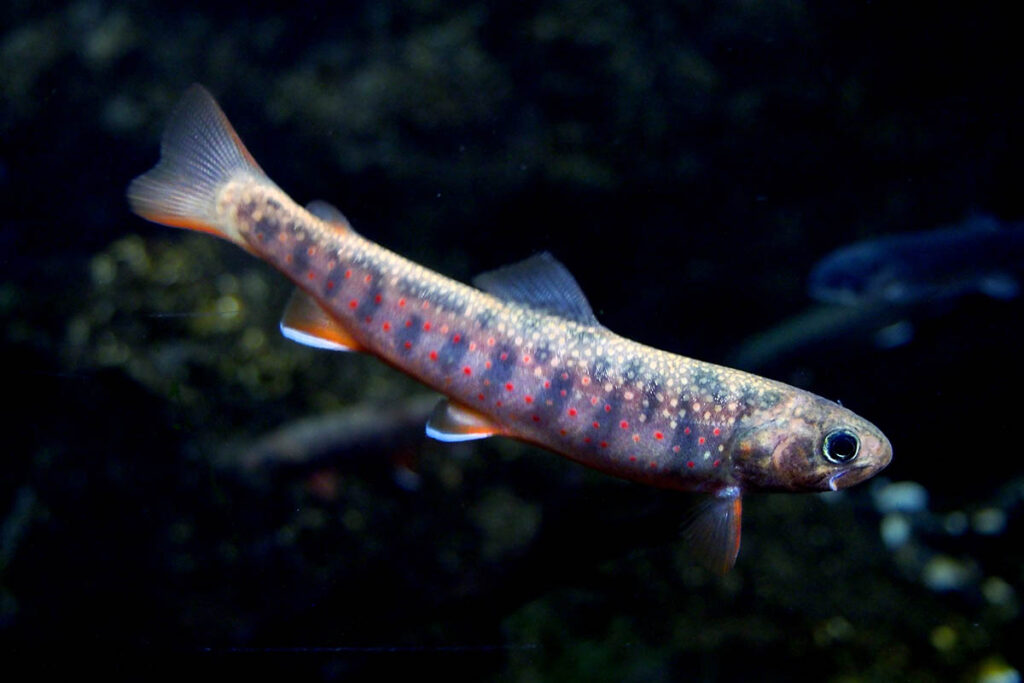
Char are among the most complex and confusing fish in North America, and distinguishing bull trout vs Dolly Varden has challenged even expert biologists for over a century. Modern genetic testing offers the most accurate identification, but it’s not a practical option for most anglers.
Fortunately, you don’t need a lab to make a strong guess. The best shortcut is to research the watershed you’re fishing. Biologists have already identified which fish live within many watersheds. In places where only one species is known to occur, the answer may already be waiting in a government report or species distribution map.
Where bull trout and Dolly Varden overlap, your best bet is to use the LDF and life history clues.
Good luck out there, and check back: we’ll update this article as new science sheds more light on these look-alike salmonids.
Sources
Behnke, R. J. (2002). Trout and Salmon of North America. New York: The Free Press.
Quinn, T. P. (2018). The Behavior and Ecology of Pacific Salmon and Trout (2nd ed.). Seattle: University of Washington Press.
Haas, G. R., & McPhail, J. D. (1991). Systematics and distribution of Dolly Varden (Salvelinus malma) and bull trout (Salvelinus confluentus) in North America. Canadian Journal of Fisheries and Aquatic Sciences, 48(11), 2191–2211. https://doi.org/10.1139/f91-258
Taylor, E. B., Yau, M. M., & Seiler, S. M. (2019). Physiological and biochemical responses to seawater exposure in anadromous and resident Dolly Varden charr (Salvelinus malma). Canadian Journal of Zoology, 97(12), 1145–1154.
Cunjak, R. A., Muir, A. M., & Power, G. (1998). Comparative energetics of resident and anadromous Dolly Varden and bull trout. Environmental Biology of Fishes, 52, 241–254. https://doi.org/10.1023/A:1007422619263
Bowerman, T., Keefer, M. L., & Caudill, C. C. (2012). Comparative muscle physiology of resident and migratory forms of bull trout (Salvelinus confluentus). Journal of Fish Biology, 80(5), 1216–1233.
Lehnert, S. J., Ferguson, M. M., & Noakes, D. L. G. (2014). Habitat use of Dolly Varden charr and bull trout in southeast Alaskan streams. Transactions of the American Fisheries Society, 143(4), 1011–1023.
Katz, S. L., Moyle, P. B., & Quiñones, R. M. (2006). Morphological and physiological differences between Dolly Varden and bull trout in the Susitna River, Alaska. Alaska Fisheries Research Bulletin, 12(1), 1–13.
Washington Department of Fish and Wildlife. (2004). Washington State Salmonid Stock Inventory: Bull Trout/Dolly Varden (WDFW Publication #00193). https://wdfw.wa.gov/sites/default/files/publications/00193/wdfw00193.pdf
Washington Department of Fish and Wildlife. (2004). Bull Trout and Dolly Varden Species Interaction Literature Review (WDFW Publication #00930). https://wdfw.wa.gov/sites/default/files/publications/00930/wdfw00930.pdf